Digital Archive
Motif Philosophy
Tracing the legacy of traditional Banjar gold embroidery. Every twist of thread and arrangement of beads holds a story of enduring local wisdom.
Pakem
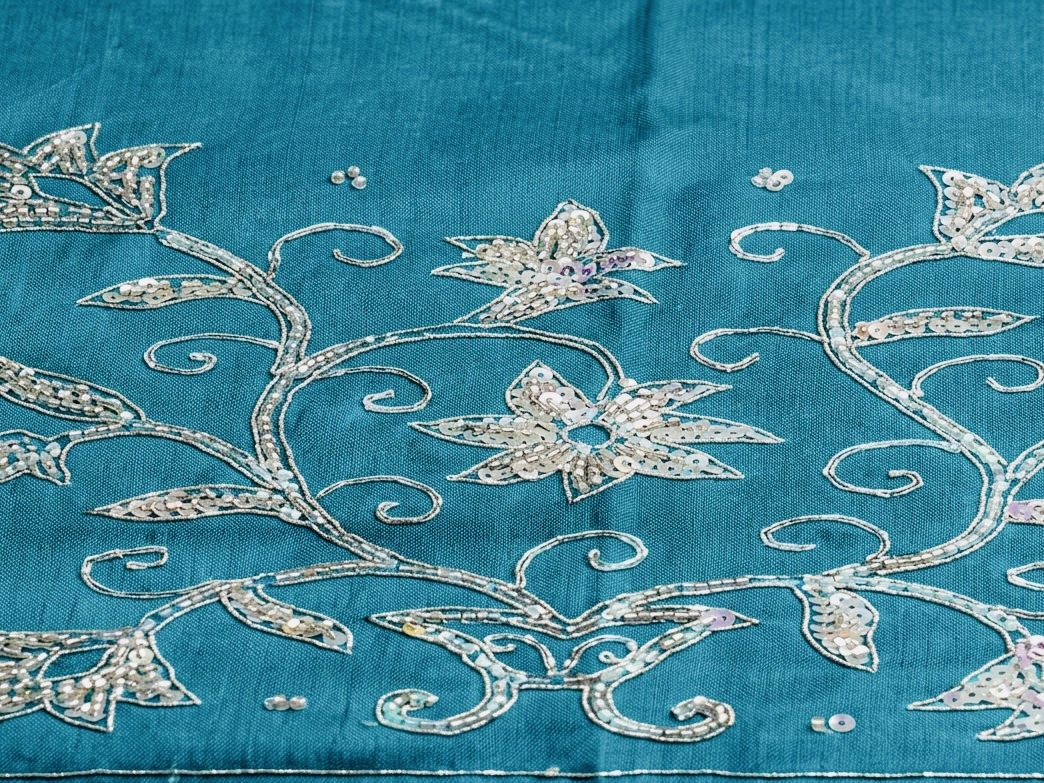
Kambang Sakaki (The Floral Bouquet in a Vase)
Visualized as a graceful cluster of blossoms meticulously arranged within a traditional jambangan (vase), the Kambang Sakaki motif serves as a profound 'visual prayer' symbolizing fertility, prosperity, welfare, peace, and eternal triumph that is destined to bloom continuously throughout life. Due to its sacred philosophical depth, this authentic pattern holds an exceptionally esteemed position within Banjar's textile heritage. Historically, its traditional application was strictly reserved to adorn prestigious royal regalia, including Tapih Nanang and Tapih Galuh (noble ceremonial attire), majestic Banjar wedding garments, and the sacred ornamentations of both the panataian (the royal bridal backdrop) and the grand throne of the Sultanate.
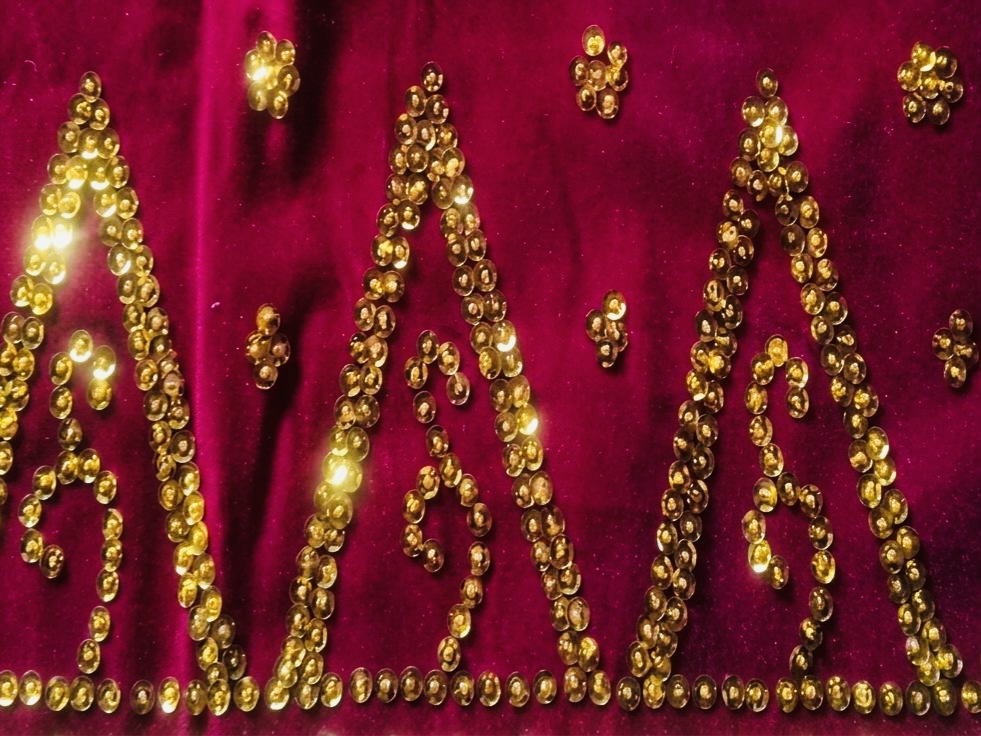
Pucuk Rebung (The Bamboo Shoot Pattern)
Characterized by its sharp, isosceles triangular geometry enclosing a stylized heart at its core, the Pucuk Rebung (locally transcribed as Pucuk Rabung) motif captures the essence of a newly sprouted bamboo shoot. Within Banjar cultural philosophy, this un-bloomed bud serves as a profound allegory for purity, honor, and untainted virtue, reflecting the sacred youth (perawan and perjaka) of the Banjar people. Beyond its moral symbolism, this exquisite pattern carries structural prayers for rapid personal growth, high-reaching aspirations, and an unyielding resilience—instilling a life principle that, much like the bamboo, stands firm and unbreakable against the turbulent winds of adversity. Due to its sacred depth, this authentic motif was historically strictly reserved to adorn prestigious noble regalia, including Tapih Nanang, Tapih Galuh, Baju Galuh, and Laung Nanang (traditional male headgear), as well as serving as a principal ornamentation for the panataian (royal bridal backdrops) and the Sultanate’s majestic throne.

Pucuk Rabung Balucuk (The Pointed Bamboo Shoot Pattern)
Characterized by its sharp, isosceles triangular geometry enclosing a stylized heart at its core, the Pucuk Rabung Balucuk motif captures the pure essence of a newly sprouted bamboo shoot. Within Banjar cultural philosophy, this tightly closed, un-bloomed bud serves as a profound allegory for purity, honor, and untainted virtue, beautifully reflecting the sacred youth (perawan and perjaka) of the Banjar people who are yet to step into adulthood. Beyond its moral symbolism, this exquisite pattern carries structural prayers for rapid personal growth, high-reaching aspirations, and an unyielding resilience—instilling a life principle that, much like the bamboo, stands firm and unbreakable against the turbulent winds of adversity. Due to its sacred depth, this authentic motif was historically strictly reserved to adorn prestigious noble regalia, including Tapih Nanang, Tapih Galuh, Baju Galuh, and Laung Nanang (traditional male headgear), as well as serving as a principal ornamentation for the panataian (royal bridal backdrops) and the Sultanate’s majestic throne.
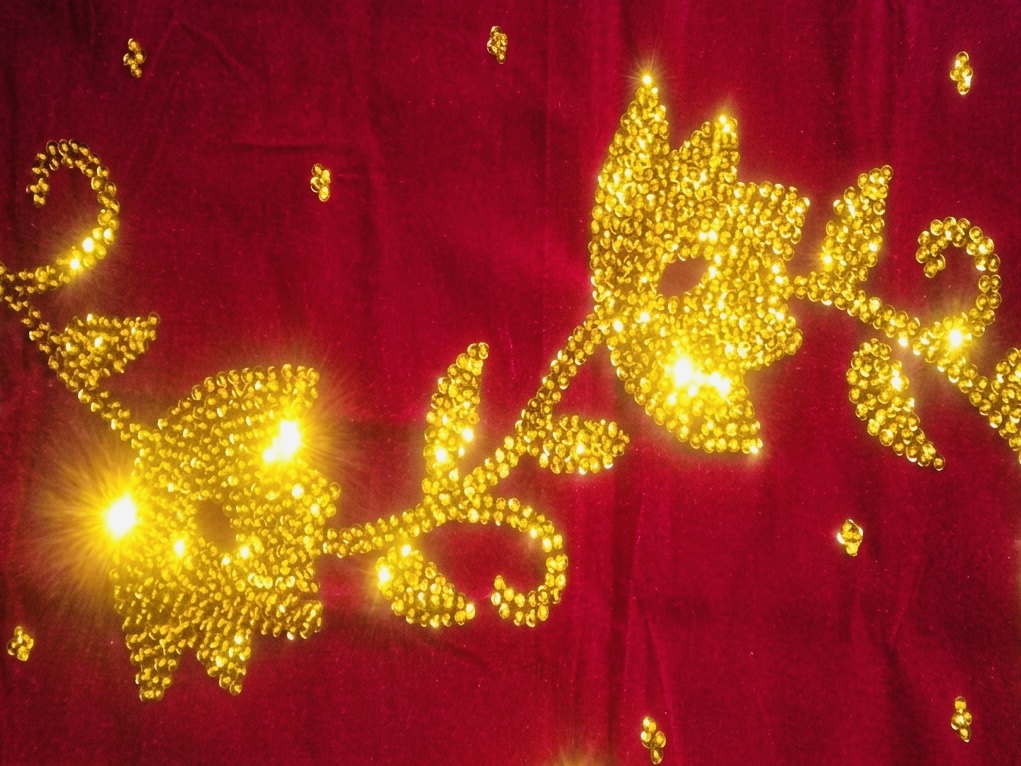
Kambang Waluh (The Pumpkin Blossom Pattern)
Capturing the organic elegance of Banua’s native flora, the Kambang Waluh motif beautifully stylizes the blooming blossom of a trailing pumpkin plant. Visually, this authentic pattern is distinguished by its odd-numbered petals—typically featuring five or seven layers—connected by gracefully winding, continuous vines that merge seamlessly at the flower's central core. This dynamic botanical structure is further enriched by clusters of odd-numbered leaves, ranging from one to three per stem, showcasing intricate vine tips trailing dynamically across the textile canvas. Beneath its exquisite design, Kambang Waluh carries a profound cultural philosophy symbolizing fertility, abundant prosperity, and spiritual greatness, with its unbroken vines serving as a visual prayer for an endless stream of blessings. Due to its prestigious symbolic weight, this masterpiece was historically strictly reserved to adorn high-status regalia, including Tapih Nanang, Tapih Galuh, Baju Kurung Galuh (noble women's attire), and Laung Nanang (traditional male headgear), as well as serving as a principal ornamentation for the panataian (royal bridal backdrops) and the Sultanate’s majestic throne.

Kambang Kacang (The Legume Vine Pattern)
Deeply inspired by the climbing characteristics of the long bean plant that actively trails (malayap), the Kambang Kacang motif exhibits a dynamic visual structure of winding vines weaving fluidly in both vertical and horizontal directions. This botanical movement is masterfully captured through local expressions: baluk-kaluk (curving), bagilit-gilit (twisting), and bahular-hular (undulating like a serpent), intertwining seamlessly into an endless, unbroken loop. Philosophically, Kambang Kacang serves as a powerful allegory for communal unity, the enduring spirit of gotong royong (mutual cooperation), deep social intimacy, and an everlasting resilience that refuses to yield. Due to its profound sociological weight, this authentic masterpiece was traditionally woven into prestigious ceremonial attire, such as Tapih Nanang, Tapih Galuh, and traditional wedding garments for both brides and grooms, as well as daily textiles for noble adults. Furthermore, its application elegantly adorned royal sanctuary interiors, spanning the panataian (bridal backdrops), the Sultanate’s majestic throne, and ceremonial kelambu (royal bed canopies).